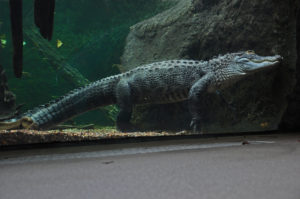
In an effort to show off some of our amazing herp species here at the museum, I am starting a new series of “Herp Highlight” posts that will showcase some of our awesome Virginia natives. And to start off our highlight series I have chosen the most obvious candidate, the “biggest and baddest” of our reptiles, our American Alligator (Alligator mississippiensis). At just over six feet and weighing in at about 110 lbs, the alligator on exhibit is the largest reptile the herpetology team cares for at the museum (this does not include the Loggerhead Sea Turtle, cared for by our awesome Aquariums department)!
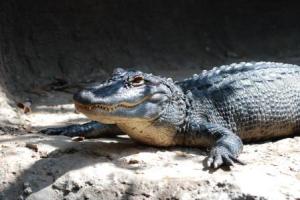
“Wait a minute! There are no gators in Virginia!” Well that’s a good point: There are no wild alligators in Virginia…for now. In the past, the range of American Alligators extended just up into Virginia, mostly in the area of the Great Dismal Swamp. However, hunting in the 1900’s decimated the populations of gators, driving them to the brink of extinction. In 1973, the American Alligator was listed on the Endangered Species Act and became federally protected. Since that time, alligator numbers have miraculously rebounded and the species was taken off the endangered list in 1987, making alligators a true conservation success story. Though they have not returned to Virginia just yet, American Alligators can be found from Florida to North Carolina, just shy of the VA border.

In the wild, male alligators may grow as large as 14 feet (females reach about 10) and feed on a variety of animals including fish, turtles, snakes, water birds, frogs, and shoreline mammals. In recent years, researchers have been surprised to find that alligators (and their crocodile cousins) also often feed on fruits and berries growing around their habitat, making them omnivorous and not strictly carnivores as previously believed. Here at the Living Museum our alligators receive a diet of mice/rats, smelt, croc-chow, trout and catfish!
Here are just a few fun facts about alligators!:
- Alligators have around 80 teeth which the shed frequently like sharks. An alligator may go through 2,000-3,000 teeth in its lifetime!
- Even though alligators are reptiles, they are more closely related to birds.
- Most reptiles and amphibians have a three-chambered heart. The alligator has a four-chambered heart just like birds and mammals.
- Female gators make very devoted mothers, and will care for their young for up to 2 years!
- The word “alligator” come from the Spanish word for lizard, “el legarto”.
- Alligators are covered in a tough armor called osteoderms, which is made up of bone embedded in their skin.
- The temperature of the nest determines whether the hatchlings will be male or female! This is known as temperature dependent sex determination.
- Alligators have acute sensory organs in their jaws that can detect disturbances in the water.
Be sure to stop by the Living Museum this summer and pay a visit to our american alligator!