Every spring, students from local Christopher Newport University make a trip to the Duke University Marine Lab in Beaufort, NC. A couple of aquarium employees from the VLM accompany them on the trip to help with identification and to lend an extra hand to the chaperoning professor. This year aquarists Jessi Shupe and Heidi Pankratz were selected to go. The trip, started almost 30 years ago, is a favorite tradition for biology students at CNU. Students get a chance to experience a boat trip on the RV Susan Hudson that includes trawling and dredging, walking through mud flats in the Beaufort Inlet Channel, and a visit to the North Carolina Aquarium at Pine Knoll Shores. The aquarium department at the VLM also gets a chance to collect specimens for use in exhibits.
 |
| We brought coolers on board to hold collected animals |
The trawl allows us to catch species living just above sediment (hake, flounder, crabs) and the dredge pulls up species living in the sediment. The catch from the boat this year was good, but less diverse than usual because of the long winter and cold waters (~55 F).
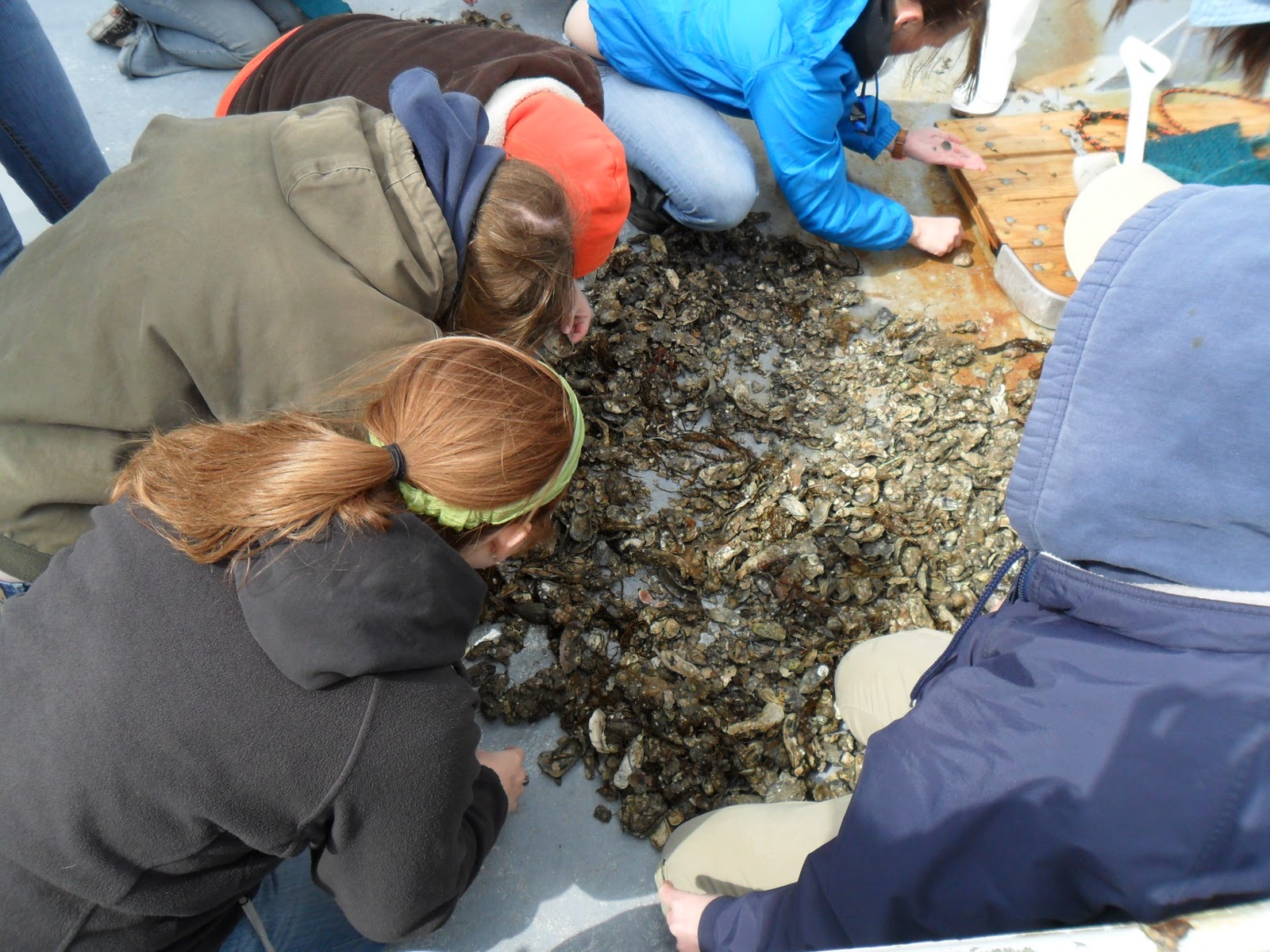 |
| Students sort through catch from the dredge |
The mud flats we visit are home to a variety of mollusks that thrive in an environment of changing tides, including oysters, whelks, conchs, and clams. We visit at low tide, which allows us to cover more area and find animals to collect.
 |
| Jessi fights through the deep mud |
 |
| CNU student Emily Wolford shows off the lightning whelk she found (eating a clam) |
After the boating and trekking through mud flats, students have a lab session that gives them a chance to go through and identify the collected specimens.
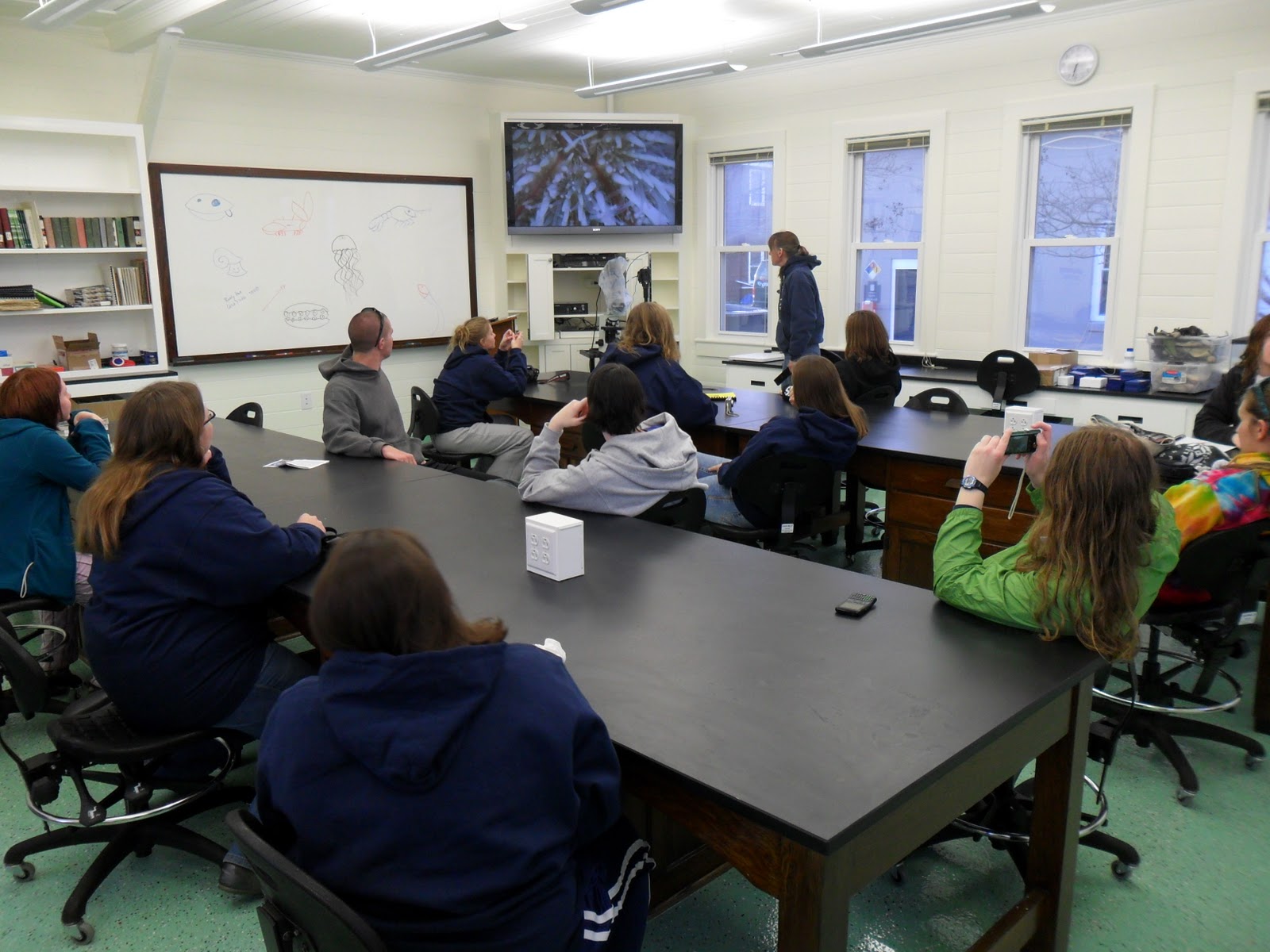 |
| Dr. Gwynne Brown, professor of biology at CNU, talks about the water vascular system of sea urchins |
 |
| The wet labs allowed us to hold our collected animals overnight until the drive back to the VLM |
 |
| Jessi and I enjoyed a behind-the-scenes tour of the NC Aquarium |