250 Years of Virginia Wildlife
As America celebrates its 250th anniversary, we’re taking a look at another piece of Virginia’s history: the wildlife that has shared this landscape with us for generations.
In 1776, Virginia looked very different than it does today. Vast forests stretched across the Commonwealth. Wetlands teemed with life. Rivers flowed freely. Along the coast, sharks cruised the waters of the Chesapeake Bay while bald eagles nested along shorelines and riverbanks.
Many of the animals Virginians would have recognized 250 years ago are still here today.
Others are not.
Some disappeared forever. Some nearly vanished before conservation efforts helped them recover. And some continue to depend on our protection today.
Their stories remind us that the future of Virginia’s wildlife is not guaranteed. It is something we help shape through conservation, education, and stewardship.
How Do We Know What Lived in Virginia 250 Years Ago?
The story of Virginia’s wildlife comes from many sources. Historical journals, early naturalists’ observations, Indigenous knowledge, museum collections, archaeological evidence, and modern wildlife research all help paint a picture of the animals that once shared Virginia’s forests, rivers, wetlands, and coastlines.
Together, these records allow us to look back in time and better understand how Virginia’s wildlife has changed over the last 250 years.
The Animals We Lost
Not every species that called Virginia home in 1776 survived the centuries that followed.
Passenger Pigeon
Imagine standing in Virginia 250 years ago and looking up to see a flock of birds so large it darkened the sky.
That was once a common sight.
Passenger pigeons were among the most abundant birds in North America, traveling in enormous flocks that could number in the millions. As forests were cleared and hunting increased, their numbers declined rapidly.
The last passenger pigeon died in 1914.
Today, the species exists only in photographs, museum collections, and historical records.
Did You Know?
Naturalists described passenger pigeon flocks so large that they could take hours to pass overhead.
Source: Smithsonian Institution
Carolina Parakeet
Many people are surprised to learn that Virginia was once home to a native parrot.
The brightly colored Carolina parakeet lived throughout much of the eastern United States, including portions of Virginia. These social birds inhabited forests and wetlands and were once a familiar part of the landscape.
By the early 1900s, habitat loss and hunting had driven them to extinction.
Today, no native parrot species remains in Virginia.
Eastern Elk
Large herds of elk once moved through Virginia’s forests and mountains.
Early settlers regularly documented encounters with these impressive animals, but overhunting and habitat changes eventually eliminated elk from the Commonwealth.
While elk have been reintroduced in some neighboring states, Virginia’s original population disappeared long ago.
These stories remind us that extinction is not just something that happens somewhere else. It has happened here in Virginia.
The Animals That Came Back
Not every conservation story ends in loss.
Some of Virginia’s wildlife has made remarkable recoveries thanks to habitat protection, wildlife management, and public support.
Bald Eagle
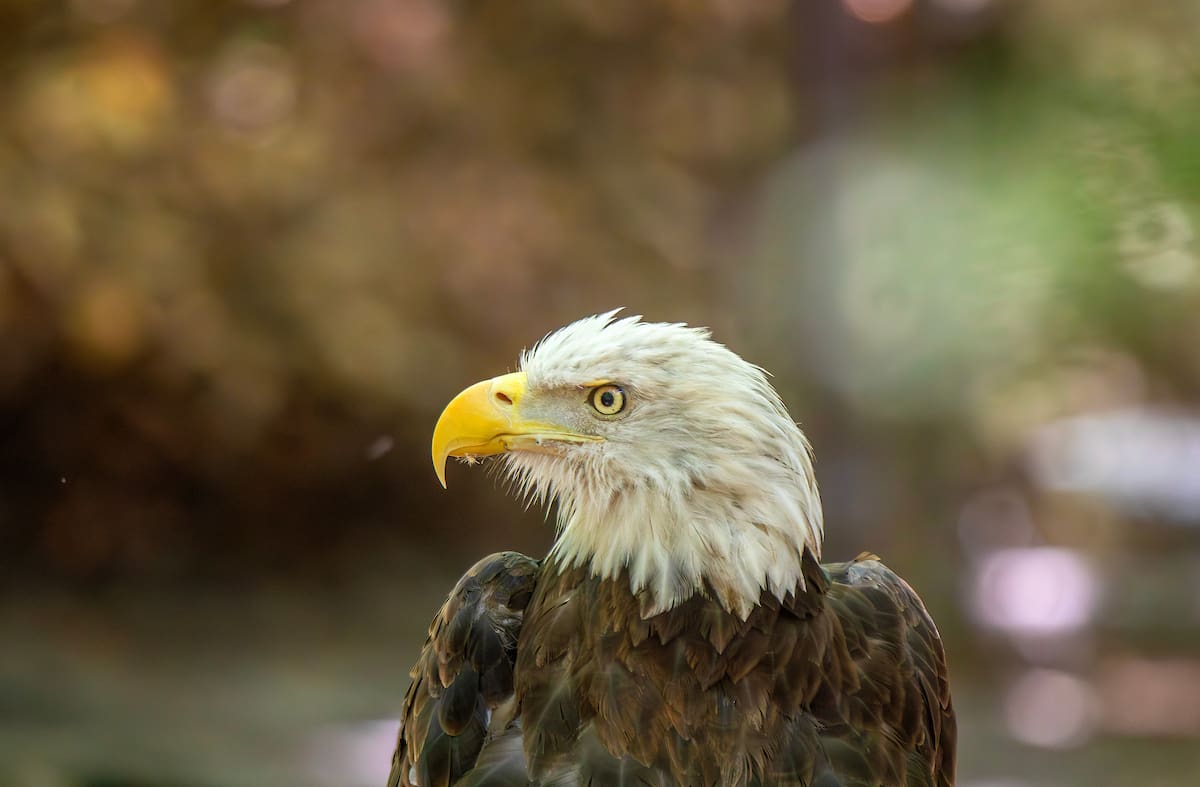
Two hundred and fifty years ago, bald eagles were a common sight along Virginia’s rivers and coastlines.
By the mid-1900s, however, their populations had declined dramatically.
Today, Virginia supports one of the largest breeding populations of bald eagles in the continental United States.
Their recovery is one of conservation’s greatest success stories and a powerful reminder that wildlife can rebound when given the opportunity.
Visitors to the Virginia Living Museum can see these iconic birds up close and learn how conservation efforts helped restore their populations.
Did You Know?
In the 1970s, Virginia had only a handful of nesting bald eagle pairs. Today, hundreds of pairs nest throughout the Commonwealth.
Source: Virginia Department of Wildlife Resources
River Otter
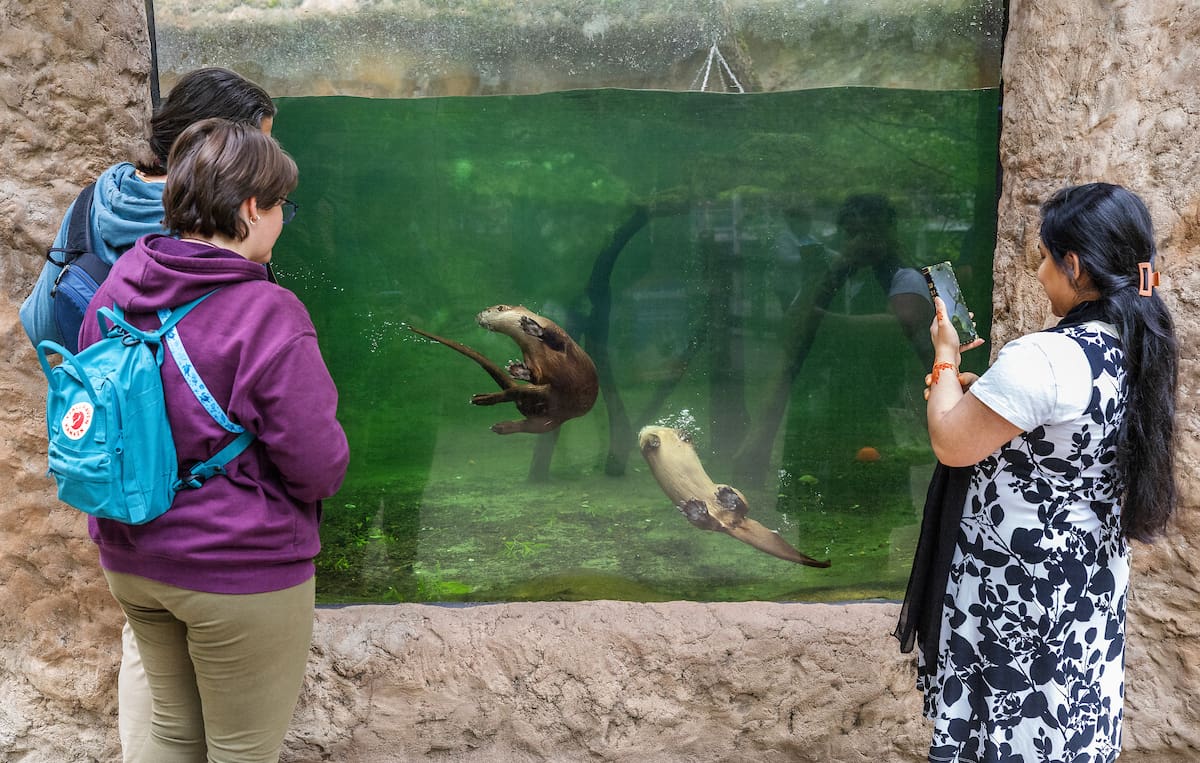
River otters have called Virginia’s waterways home for centuries.
Although populations declined due to habitat loss and trapping, improvements in water quality and habitat protection have helped them return to many areas of the Commonwealth.
Otters are more than just playful animals. Their presence often signals healthy aquatic ecosystems.
Watching river otters today is a reminder that healthy rivers benefit both wildlife and people.
Visitors to the Virginia Living Museum can often observe our river otters swimming, diving, and interacting with one another throughout the day.
Wild Turkey
Wild turkeys were abundant when America was founded, but by the early 1900s they had nearly disappeared from Virginia.
Conservation efforts, habitat restoration, and wildlife management helped reverse their decline.
Today, wild turkeys once again thrive throughout much of the state.
Their recovery demonstrates what is possible when communities invest in conservation.
The Animals Still Counting on Us
While some species have recovered, others continue to face significant challenges.
Red Wolves
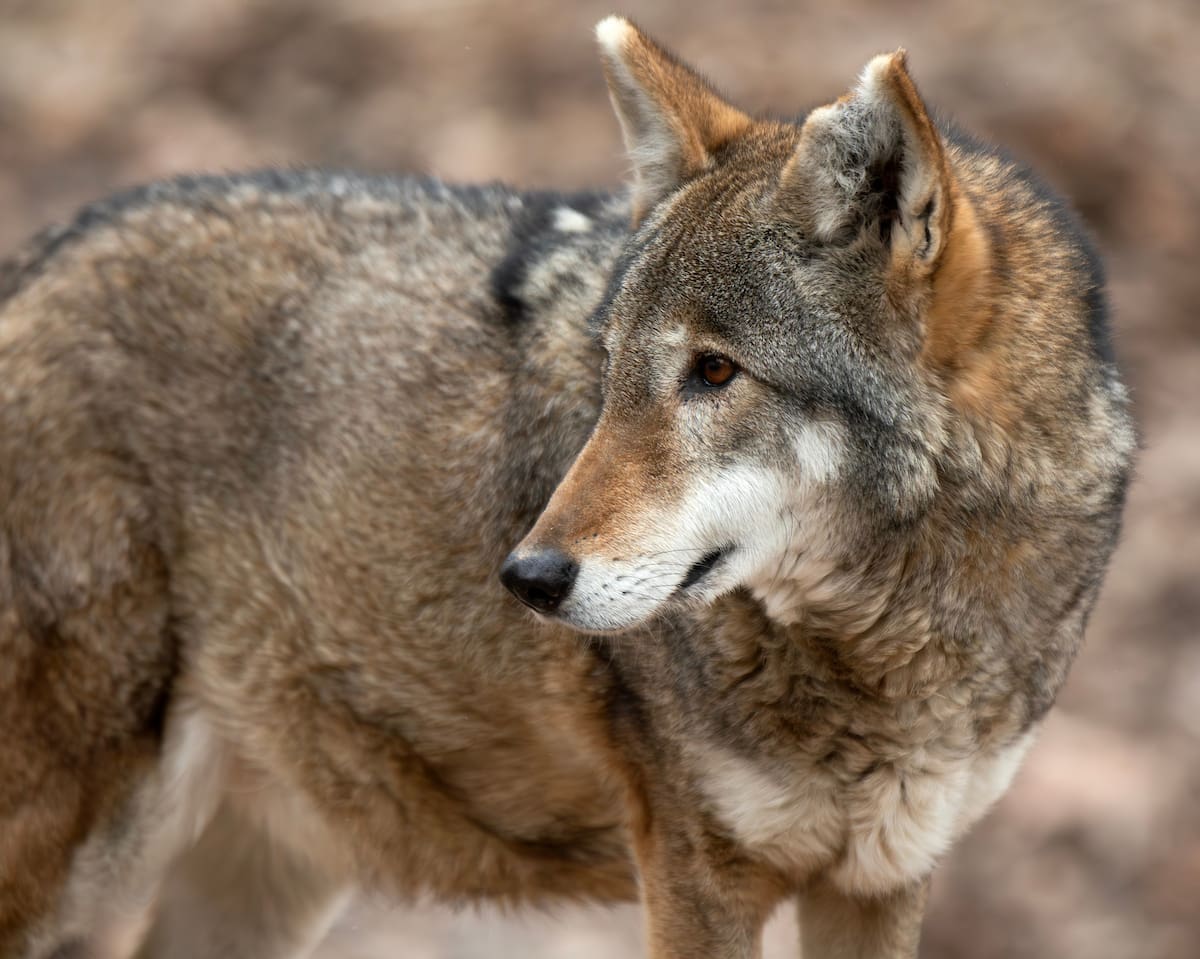
Of all the animals that once lived in Virginia, few have experienced a more dramatic decline than the red wolf.
Historically found throughout the southeastern United States, red wolves disappeared from Virginia decades ago.
Today, they are among the most endangered mammals in North America.
At the Virginia Living Museum, guests can learn about red wolves and the conservation efforts working to ensure this species remains part of our natural heritage.
Did You Know?
Red wolves are considered one of the most endangered canids in the world, with only a small wild population remaining in North Carolina.
Source: U.S. Fish & Wildlife Service
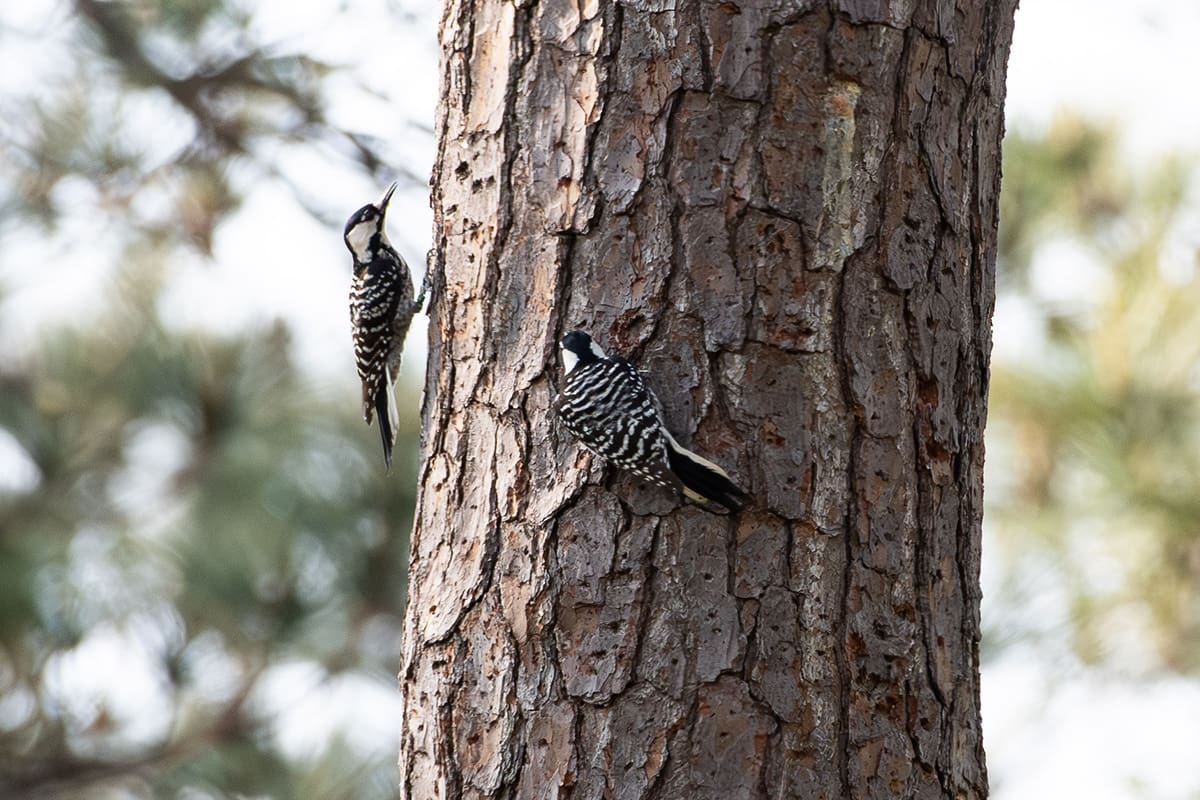
Red-cockaded Woodpecker
Long before neighborhoods and highways crossed Virginia’s Coastal Plain, mature pine forests echoed with the sound of one remarkable bird.
The red-cockaded woodpecker is unlike any other North American woodpecker. Instead of nesting in dead trees, it excavates cavities in living pine trees, a process that can take years. These cavities become homes not only for woodpeckers, but for many other species that depend on them.
As old-growth pine forests disappeared, so did much of the bird’s habitat. Today, the red-cockaded woodpecker remains federally endangered, and wildlife managers continue restoring longleaf pine ecosystems throughout the Southeast to support its recovery.
Its story reminds us that protecting wildlife often means protecting entire habitats.
Did You Know?
Red-cockaded woodpeckers create tiny holes around their nest cavities that cause pine resin to flow down the trunk, helping deter climbing predators such as snakes.
Source: U.S. Fish & Wildlife Service
Sharks in the Chesapeake Bay
Many people are surprised to learn that sharks have been part of Virginia’s coastal ecosystem for centuries.
The Chesapeake Bay serves as an important nursery and feeding habitat for several shark species. These animals play a critical role in maintaining healthy ocean ecosystems.
Through educational programs and conservation partnerships, the Virginia Living Museum helps visitors better understand the importance of sharks and the challenges they face.
Visitors can learn more about Virginia’s shark species through exhibits, programs, and seasonal events throughout the year.
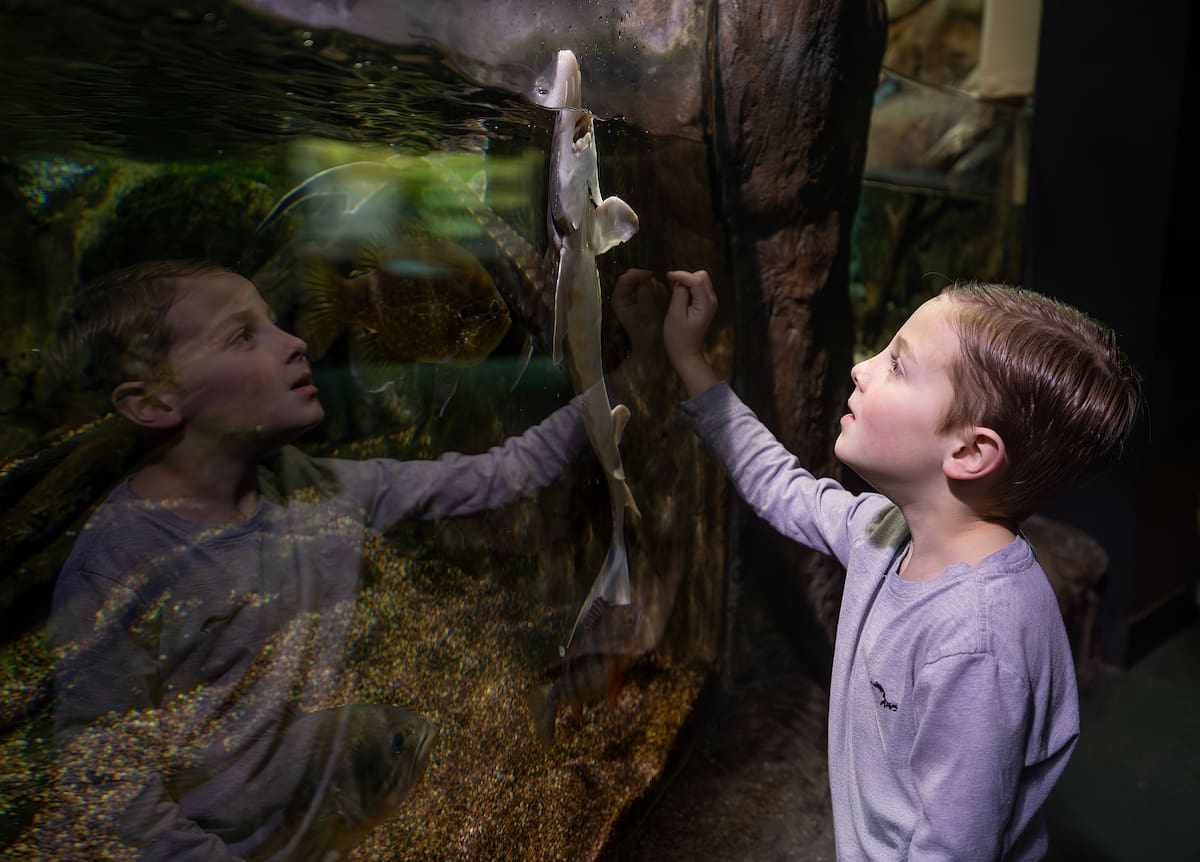
Atlantic Sturgeon
Long before America celebrated its 250th birthday, Atlantic sturgeon were already swimming through Virginia’s rivers.
Often called “living fossils,” these remarkable fish have existed for more than 100 million years, surviving the extinction of the dinosaurs and countless changes to Earth’s climate. When Virginia’s earliest Indigenous communities lived along these waterways, sturgeon were already ancient. When the Declaration of Independence was signed, they continued their annual migrations between the Atlantic Ocean and rivers like the James and York.
Today, however, their future is far less certain.
Centuries of overfishing, dams, habitat loss, and declining water quality caused Atlantic sturgeon populations to plummet. They are now protected under the Endangered Species Act, and scientists continue working to restore the rivers they depend on for spawning.
Their story reminds us that even species that have survived millions of years can disappear if we fail to protect the habitats they need.
Did You Know?
Atlantic sturgeon can live for more than 60 years, grow over 14 feet long, and have been swimming Virginia’s waters since long before the age of dinosaurs came to an end.
Source: NOAA Fisheries
Conservation Is Still Happening Today
The story of Virginia’s wildlife did not end in 1776.
It continues every day.
Across the Commonwealth, conservationists, researchers, educators, and community members are working to protect habitats and support native species.
At the Virginia Living Museum, that work takes many forms. Museum staff participate in projects that support healthy ecosystems across Virginia, including eelgrass restoration efforts on Virginia’s Eastern Shore and habitat-focused initiatives here on our own campus. These projects help improve water quality, support native wildlife, and demonstrate how conservation can make a difference close to home.
Every restoration project, every educational program, and every child who discovers a new appreciation for wildlife becomes part of Virginia’s conservation story.
What Will Virginia Look Like in 2276?
Two hundred and fifty years ago, Virginians shared their forests with elk and their skies with passenger pigeons.
Some of those animals are gone.
Others have returned.
Many still need our help.
As we celebrate America’s 250th anniversary, these stories remind us that history is not only found in documents and monuments. It is also written in forests, rivers, wetlands, and the wildlife that calls Virginia home.
The choices we make today will help determine what future generations experience 250 years from now.
Because the story of Virginia’s wildlife is still being written.
Learn More
The information in this article was compiled using resources from wildlife agencies, conservation organizations, museums, and historical records, including:
- Virginia Department of Wildlife Resources
- U.S. Fish & Wildlife Service
- National Park Service
- Smithsonian Institution
- Cornell Lab of Ornithology
- The Nature Conservancy
- NOAA Fisheries
- Virginia Institute of Marine Science (VIMS)
- Encyclopedia Virginia
- Library of Virginia
See These Stories Come to Life at the Virginia Living Museum
Reading about Virginia’s wildlife is one thing. Seeing these animals up close is something else entirely.
During your visit to the Virginia Living Museum, you can watch river otters play, look out over the boardwalk to see our resident bald eagle, discover the important role sharks play in Virginia’s coastal waters, and meet one of North America’s most endangered mammals, the red wolf. Along the way, you’ll also learn how scientists, conservationists, and educators across the Commonwealth are working to protect the habitats and species that make Virginia unique.
Every exhibit tells part of Virginia’s story. Every visit helps support conservation, education, and the wildlife that still calls our Commonwealth home.
Come explore Virginia’s past, present, and future—one species at a time.