Each fall, billions of birds begin one of nature’s most remarkable journeys.
Traveling thousands of miles in search of warmer weather, these tiny migrants navigate using the stars, the Earth’s magnetic field, and familiar landscapes as they make their way south. Here in Virginia, we’re fortunate to witness this incredible phenomenon as millions of birds pass through the Atlantic Flyway, one of North America’s four major migration routes.
But for many birds, the journey ends far sooner than it should because of bird strikes with windows.
One of the greatest human-caused threats to migratory birds isn’t what most people expect.
It’s glass.
Why Do Bird Strikes Happen?
Birds don’t recognize glass as a solid surface.
Instead, they often see reflections of trees, sky, or water and believe they’re flying toward safe habitat. Other times, they can see vegetation through a building and attempt to fly straight through it.
The result is a bird strike that can cause serious injury or death.
While dramatic bird strikes involving skyscrapers sometimes make headlines, most bird strikes actually happen at homes and buildings fewer than four stories tall because they’re often surrounded by the trees, gardens, and water sources birds rely on during migration.
Scientists estimate that between 1 and 3 billion birds die from window collisions each year in the United States alone.
Why Fall Migration Matters
Although bird collisions happen year-round, they increase dramatically during spring and fall migration.
Here in eastern Virginia, we’re located along the Atlantic Flyway, one of the busiest migratory routes in North America. Every autumn, billions of birds travel through our region as they head south. October is typically the busiest migration month and, not surprisingly, also when we see the highest number of bird-window collisions.
Young birds making their very first migration are especially vulnerable because they have never encountered many of these human-made hazards before.
What the Virginia Living Museum Is Doing
Protecting native wildlife doesn’t stop at caring for the animals that call the Museum home. It also means protecting the wild birds that use our grounds as habitat throughout the year and during migration.
As part of the Association of Zoos & Aquariums’ North American Songbird SAFE (Saving Animals From Extinction) program, the Virginia Living Museum is committed to reducing bird-window collisions across our campus.
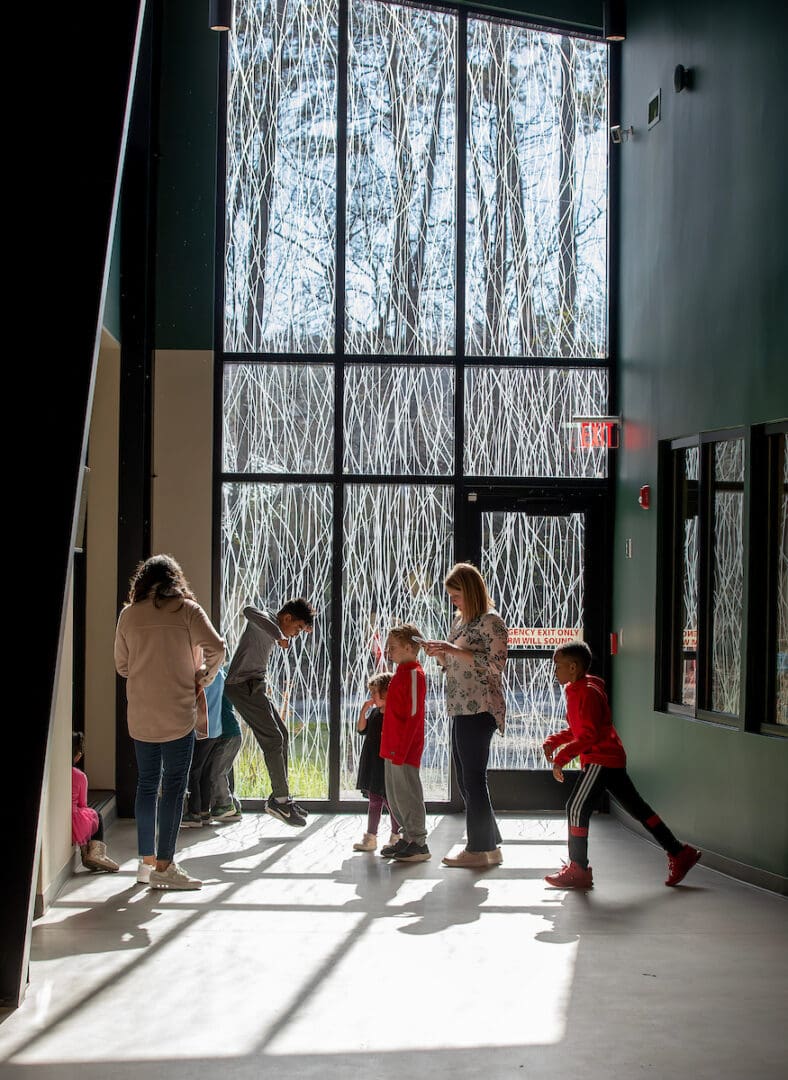
When the Wild Care Center was designed, bird-safe glass was selected from the very beginning to help prevent collisions before they could occur.
In 2024, our Wildlife Education Center was retrofitted with permanent bird-collision prevention film through an initiative led by the Museum’s Conservation Committee. Since the installation, not a single bird strike has been reported on that building.
Those efforts are also helping educate others. This summer, the Virginia Living Museum was featured by the Bird Collision Prevention Alliance for our installation of bird-collision awareness QR code decals, highlighting our commitment to protecting migratory birds and inspiring visitors to take action at home
Our work continues.
Museum staff track every known bird strike on campus, recording where it occurred, when it happened, and which species were affected. That information helps us identify areas where additional prevention measures can make the greatest difference.
Before this year’s fall migration begins, we’ll be installing additional bird-collision prevention decals in targeted locations across campus as another step toward our long-term goal of eliminating bird strikes on all Museum buildings.
Our next major initiative is retrofitting the Museum’s Main Building with permanent bird-safe film. This is a substantial investment in the future of local bird populations, and we’re seeking partners to help bring it to life.
Five Ways You Can Help Birds at Home
The good news is that protecting birds doesn’t require major renovations.
Here are a few simple changes that can make a meaningful difference.
1. Make Your Windows Visible
Install bird-friendly decals, dots, stripes, or other collision prevention products on the outside of your windows. For the greatest effectiveness, patterns should generally be spaced about two inches apart so birds don’t try to fly between them.
2. Turn Off Unnecessary Lights
During migration, bright indoor lights and upward-facing outdoor lighting can attract birds at night.
Turning off lights you don’t need, closing blinds after dark, and directing outdoor lighting downward can significantly reduce collisions.
3. Be Mindful of Landscaping
Birds are naturally drawn to trees, shrubs, and water features. If these are reflected in your windows, they can unintentionally create the illusion of safe habitat.
Bird-friendly window treatments help eliminate those dangerous reflections.
4. Know When Migration Is Happening
Free tools like BirdCast allow you to follow migration in real time and even receive alerts for nights when especially large numbers of birds will be flying through your area.
5. Share What You Learn
One bird-safe home helps. Hundreds of bird-safe homes can make an enormous difference for migrating birds.
Every Window Can Make a Difference
Migration is one of the greatest wildlife spectacles on Earth, and eastern Virginia plays an important role in that journey.
By making a few simple changes at home and supporting bird-friendly conservation efforts, we can help ensure more birds complete their remarkable migration safely.
Together, we can make our communities a little safer for the wildlife that shares them.
Learn More
The Virginia Living Museum encourages anyone interested in protecting migratory birds to explore these excellent resources:
- American Bird Conservancy (ABC)
- Stop Bird Collisions
- BirdCast Migration Tools
- U.S. Fish & Wildlife Service
- National Geographic
- WindowAlert
- Feather Friendly
- CollidEscape
- Audubon
- North American Songbird SAFE (Association of Zoos & Aquariums)