Summer Flounder

This species is famous for its abilities to perfectly camouflage itself with its surrounding substrate, where it lies in wait to ambush its prey.
Grey Snapper
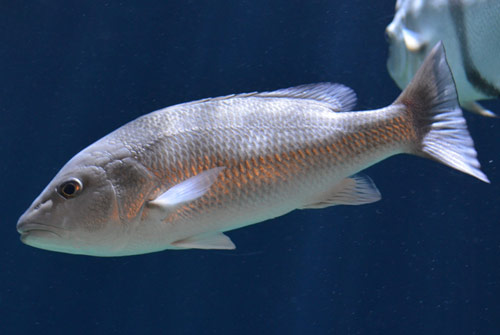
Grey snapper are very abundant in southern waters but are generally only seen as juveniles in Virginia. Young grey snappers are hardly grey, but actually can be quite colorful; ranging from dark olive to maroon with iridescent blue markings along their jaws.
Gag
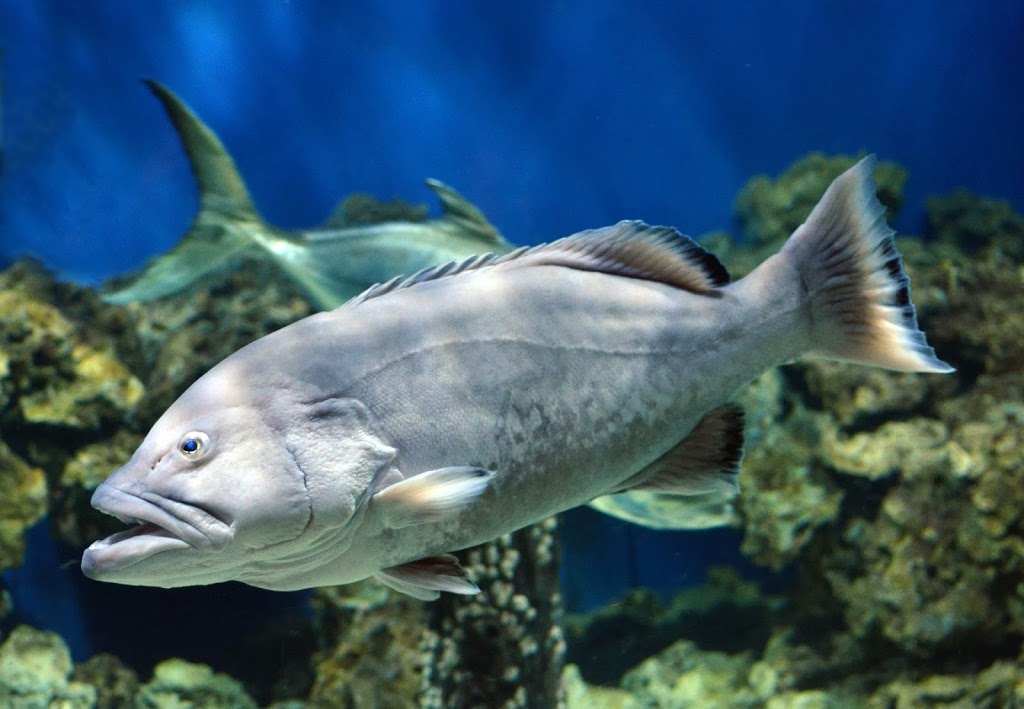
The gag grouper is a subtropical to tropical species but can be found offshore around wrecks and deep water structure. All groupers and sea basses are highly prized commercially and recreationally as food fish, but their complex ecology and slow growth make their populations difficult to assess and manage.
Cobia
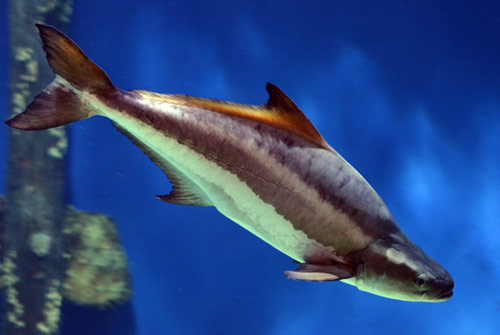
Cobia have a dedicated following, due in equal measure to: their excellence as a food fish, their size and power and to their unpredictability and seemingly random appearances through the summer. Cobia fishermen closely guard their spots and techniques adding to their mystique.
Crevalle Jack
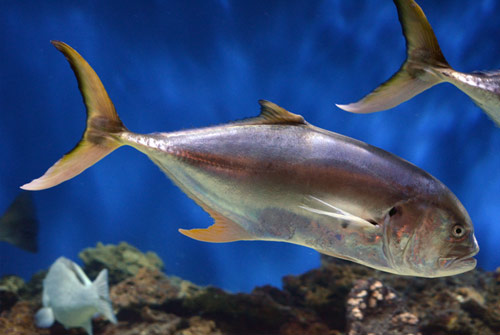
The crevalle is a common and widely recognized large jack species in sub-tropical waters, but is only a temporary visitor to Virginia and never abundant here. Adults are most common here offshore in summer, but juvenile jacks are more abundant here, found in late summer often along shallow protected beaches.
Bluefish

Bluefish are a truly voracious predator, known to gorge on schools of menhaden or anchovies, leaving a slick of chewed fish and oil for the telltale gathering of birds above a feeding frenzy. Many anglers also become aware of their aggressiveness and learn the hard way to avoid their powerful jaws and razor sharp teeth.
Spadefish
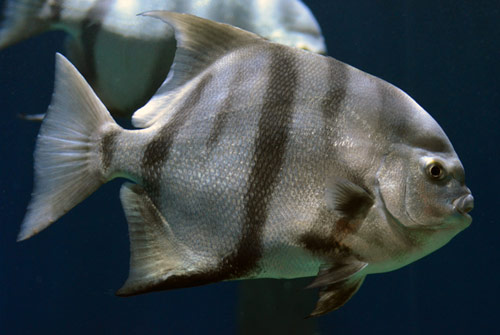
Spadefish are extremely popular as both a food fish and for sport. They are found in large schools around structure in summer, where they feed on a variety of invertebrates, including jellies.
Lookdown
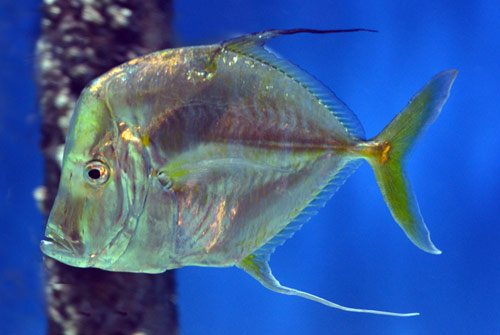
Lookdowns are named for the unusual profile of their heads which slope sharply downward. Though the adults are mostly silver with yellowish fins like most jacks, young lookdowns have very extensive fin appendages and irregular bands that help disguise them among vegetation.
Black Drum
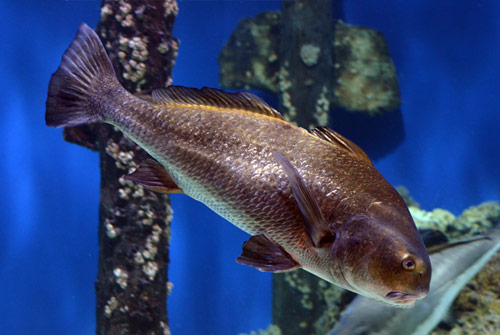
This fish is the largest of the drum family, and much broader in shape than its cousins. They have distinct beard-like barbels on the underside of their chin used to locate food along the bottom. Black drum , like the other members of the drum family, also make a croaking sound with their gas bladder, […]
Red Drum
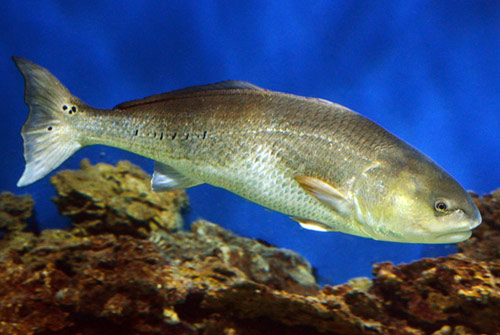
Red drum are a migratory species, but inhabit Bay waters from spring to late fall. Feeding on crustaceans and small fishes, red drum grow quickly to become one of the larger fishes in the Bay, reaching nearly one hundred pounds. These powerful fish are highly prized by anglers, as throphy sized fish move down the […]
Atlantic Croaker
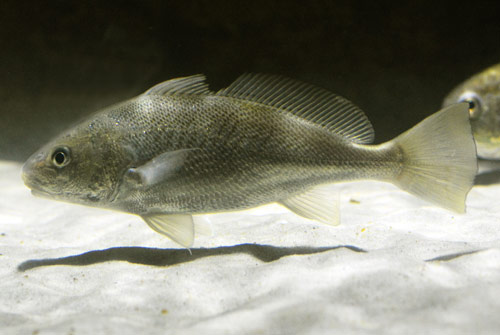
Croaker are one of the more abundant Bay species, able to thrive in a wide range of temperatures and salinities. They are famous – and named – for their frog-like croaking sound, made by rapidly vibrating muscles against the air-filled swim bladder.
Shrimp
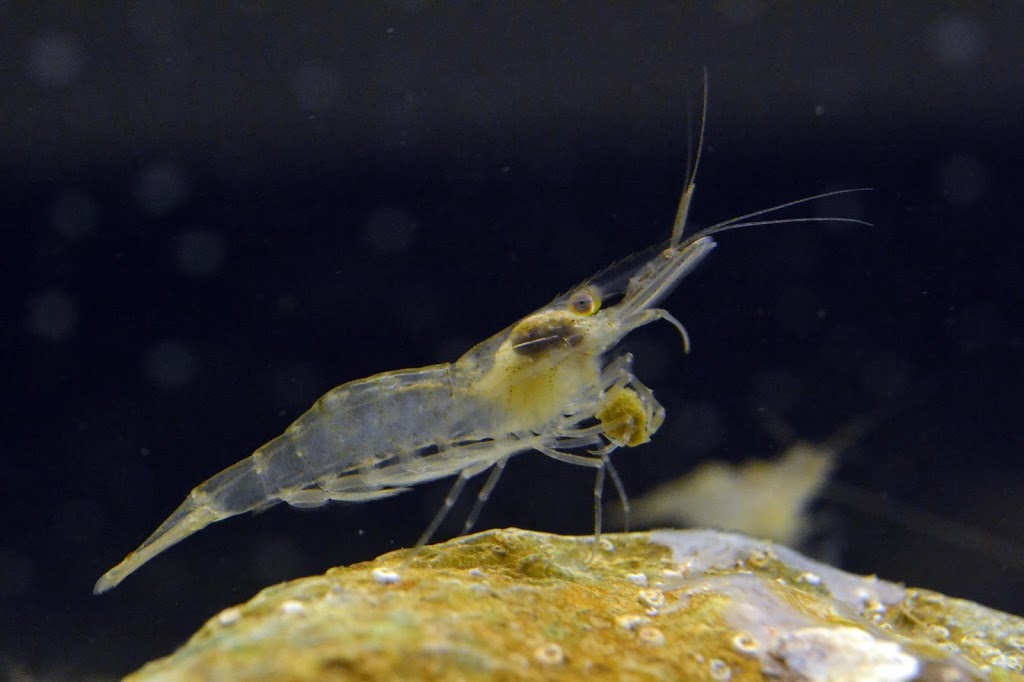
Shrimp is the most popular type of seafood in the U.S., comprising over 25% of total seafood consumption with over 4 pounds of shrimp a year eaten by the average consumer. The vast majority (> 90%) of the shrimp consumed by Americans originates from farms outside the United States, resulting in less than 10% from […]