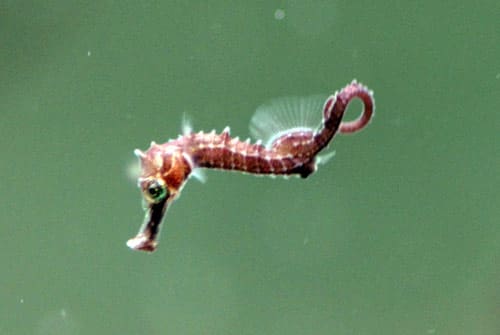
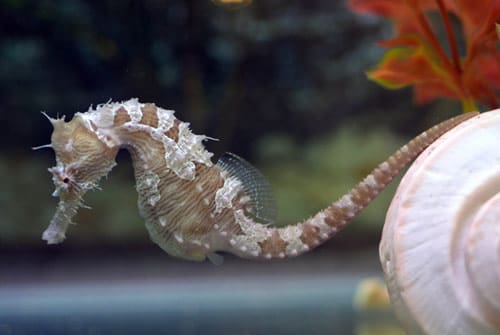
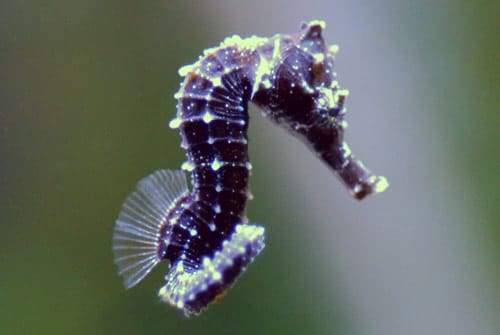
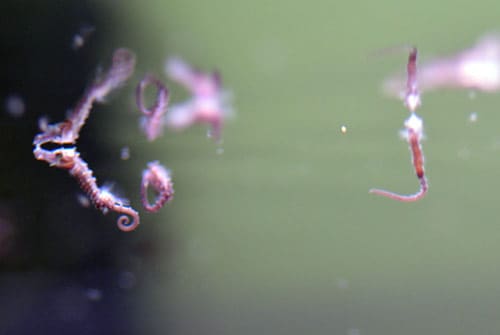
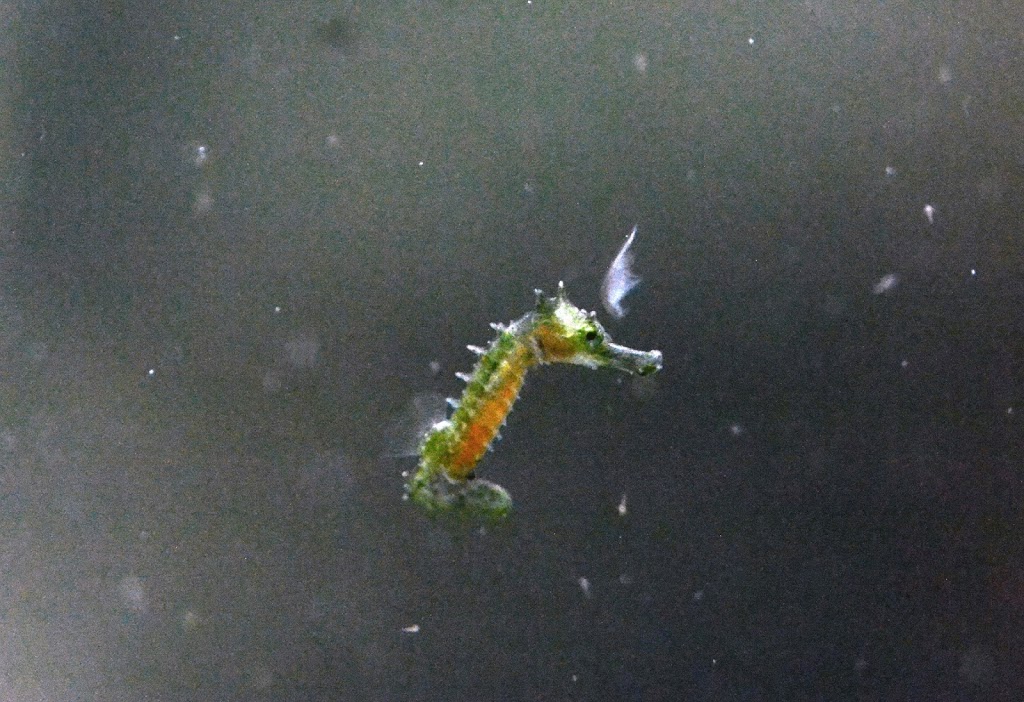
Lined seahorses (Hippocampus erectus) are native to Virginia but local populations are in decline as they are throughout their range. Seahorses are very vulnerable to commercial fishery gear caught as by-catch, but they also have long been exploited and sold as dried up souvenirs. Lined seahorses in the Bay are reliant upon structure and particularly submerged aquatic vegetation (SAV) in which they breed, use for cover and hunt for food; as the grass disappears so do the animals that rely upon it. Wild seahorses almost exclusively eat live foods, primarily small invertebrates and crustaceans such as amphipods that live in and on the grasses. Captive seahorses must be acclimated to a variety of prepared (non-live) foods, as their natural diets are difficult to reasonably replicate.
The Virginia Living Museum actively participates in AZA’s Species Survival Plan (SSP) program that coordinates with other AZA-accredited facilities across the country to manage an ex situ species population and conserve wild populations of the lined seahorse. Through coordinated