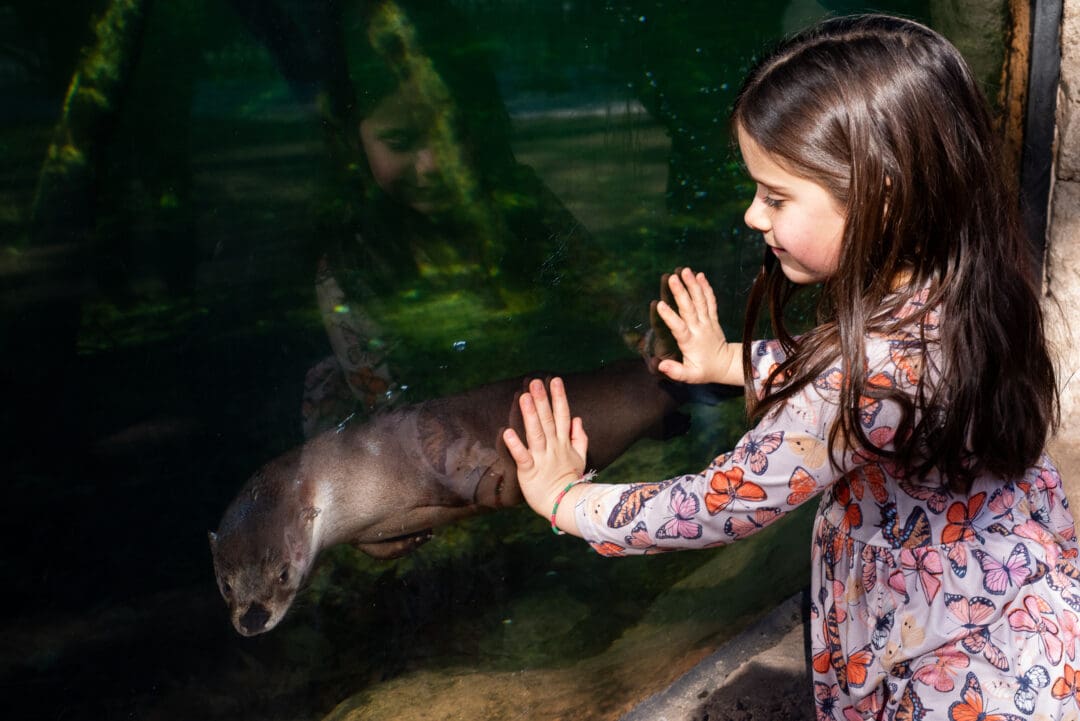
River Otter Training at the Virginia Living Museum is taking an exciting step forward as Nora begins learning to use an EKG. An EKG, or electrocardiogram, records how the heart is beating and can help identify signs of heart disease. As part of her ongoing care and enrichment, Nora the river otter is now training with a special EKG designed just for her.
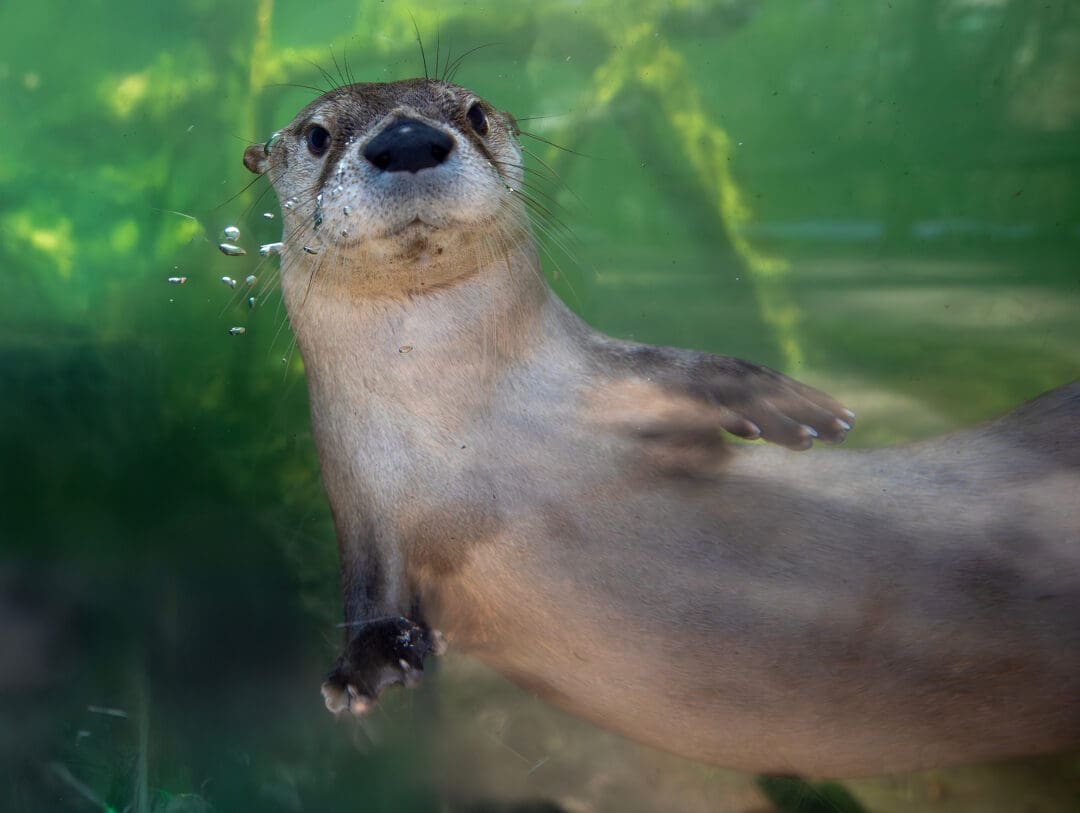
Meet Nora: Playful, Curious, and Full of Personality
Nora is only two years old, and her youth is fully visible through her playful behavior. She loves to climb, swim, and manipulate items in her environment, especially when showing off in front of guests, as she is also very sociable to humans. Her favorite enrichment is ice piles.
The First Otter of Her Kind to Try It
The idea to use an EKG holder specific to an otter was taken from an otter keeper workshop attended by Becky (Nora’s keeper and primary trainer), however the museum is the first to our knowledge to implement it. Allowing Nora involvement in her care makes the process easier, quicker, less stressful, and safer for both Nora and her keepers. It also gives her excellent duration training. Keeping an animal patient and in a specific pose are frequently important in different training exercises.
Learn more about how the EKG tool was designed specifically for Nora in this post.
Learning the Language of Training
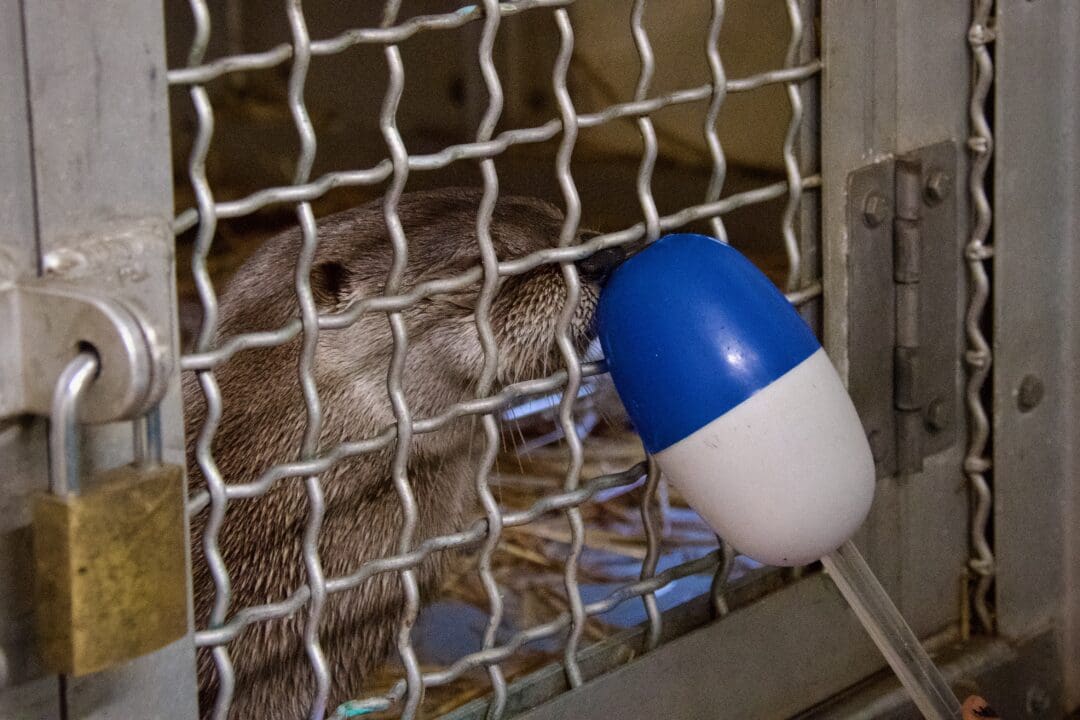
To show animals where they would like them to go, trainers use the fundamental behavior “targeting.” When targeting, animals touch their nose to a long pole with a buoy at the end of it. Another essential behavior is “shifting,” in which animals shift in and out of the indoor and outdoor portions of their enclosure. Nora knows both these behaviors, as well as “up,” “down,” “spin” which is used for full body checks, and “paw” in which she holds her paw out.
Challenges of Training a Young Otter
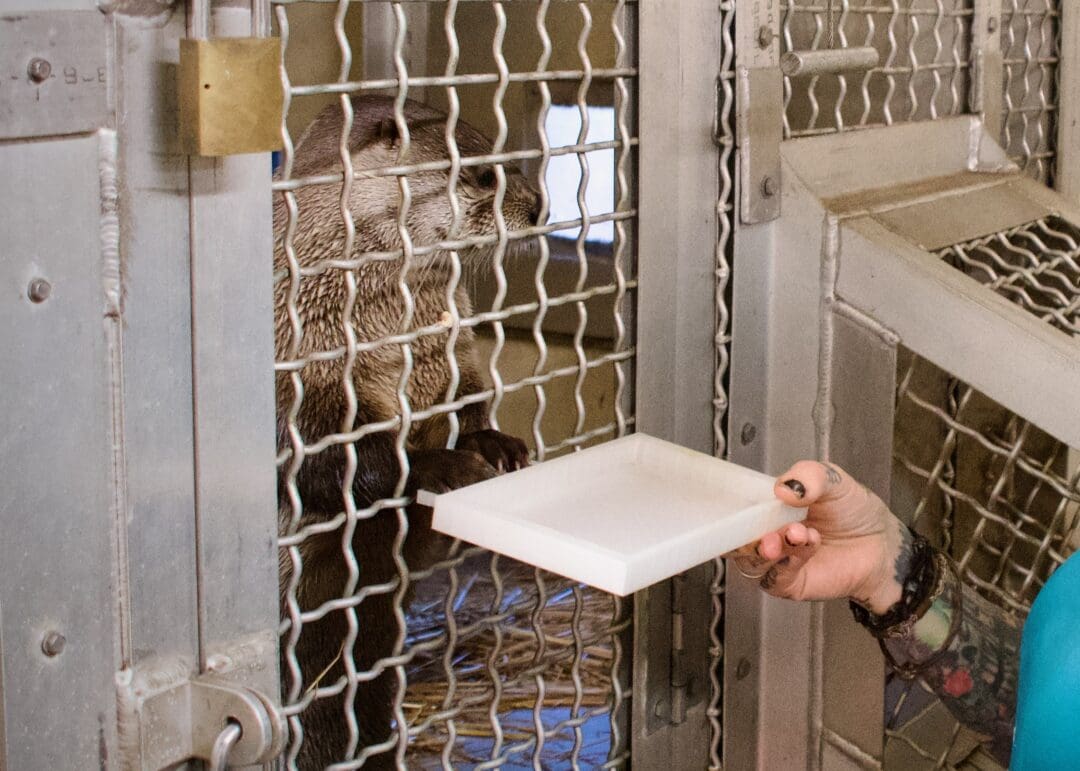
There are many challenges in teaching Nora to place her paws on the EKG. Nora’s youth makes her engaged but also easy to distract. It’s ideal to train animals within their own enclosures but the space can sometimes be awkward to maneuver in for trainers. Something that’s always a concern with training is the animal’s safety. Since otters love interacting with their mouths, the EKG holder is made of PLA (polylactic acid) which is non-toxic to animals, however Nora has yet to try nibbling on the holder.
Patience, Progress, and Positive Reinforcement
There are always ways around these challenges. Though Nora gets distracted by the shininess of the phone displaying the cardiology app, they are breaking down the training into steps or “approximations.” First they are training her to stay still in position for 30-60 seconds, then reintroducing distractions such as the phone. Teaching a behavior so complex takes many daily training sessions and her knowledge of the “paw” behavior was vital in teaching her to hold her paws out onto the EKG holder.
Slow and Steady Progress
It’s hard to say how long training will take, as it’s done at the animal’s pace but Britt (Animal Training and Enrichment Coordinator) says that they’re “very pleased with the progress she has made so far. She has made consistent, steady progress and is at the point in her training where she is sticking both of her paws out and placing them on the sensors of the EKG reader and holding for about 10 seconds. Our goal is to increase that duration to around 30-60 seconds to allow the sensor a full reading so we can get a full graphical reading… She’s already a pro at staying completely still and knows exactly what to do, so then we can work on the little distractions such as the phone. I do think she could potentially be done in a few weeks, but it could be longer depending on how she progresses.”
Be Part of Nora’s Journey
Nora’s training is just one example of the extraordinary care and innovation happening every day behind the scenes at the Virginia Living Museum. Whether you’re fascinated by animal behavior, passionate about conservation, or simply want to inspire wonder in your family, there’s so much more to explore here. Come see Nora splashing in her habitat, chat with her keepers during a training demonstration, or dive deeper into native wildlife through one of our hands-on programs.
Every visit, volunteer hour, membership, and donation helps us continue this meaningful work — caring for animals, protecting Virginia’s natural heritage, and educating our community. We’d love to welcome you in person and share more of Nora’s story with you.
Ready to take the next step?
Plan your visit, connect with a keeper, or learn how you can support the animals that call the museum home. Together, we can make a difference for wildlife across Virginia and beyond.